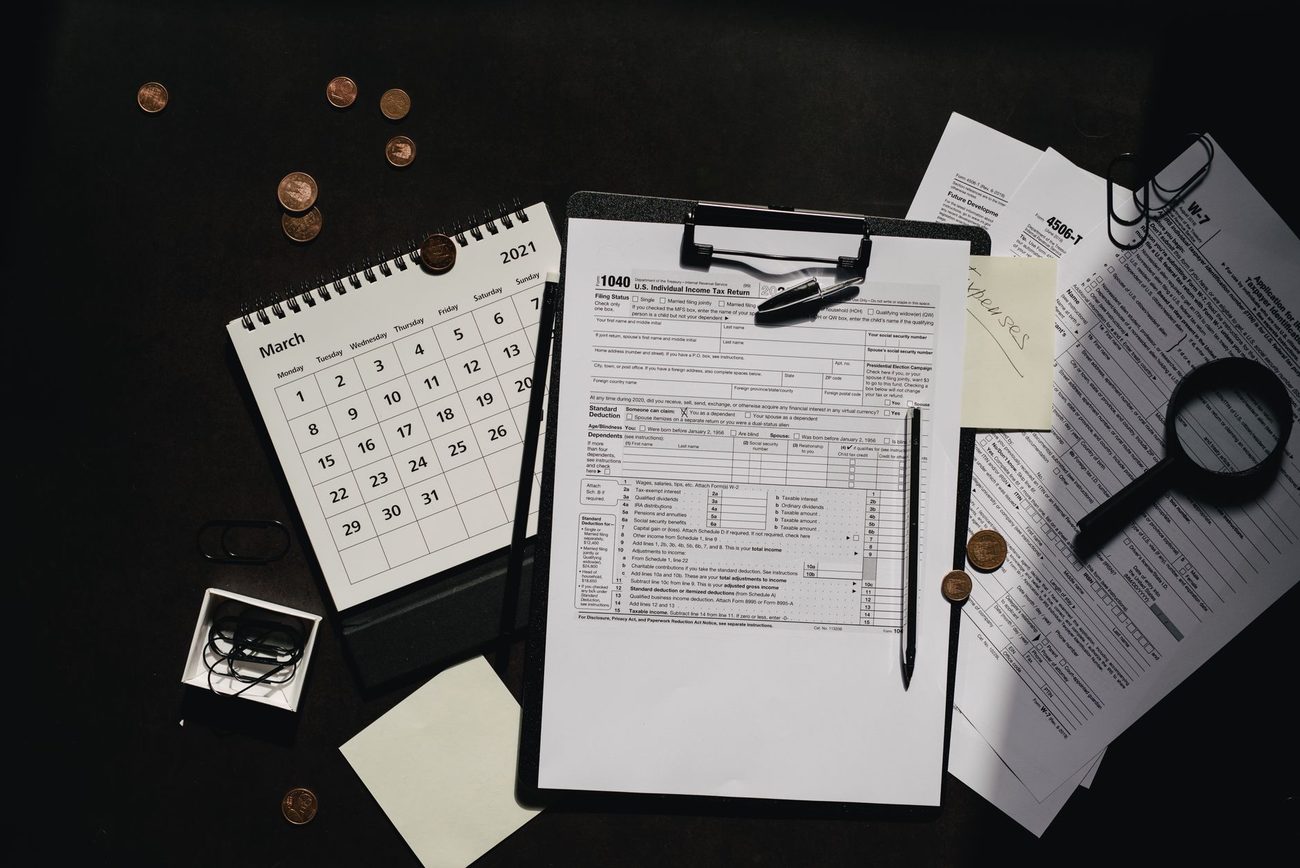
My W-2 arrived on a Thursday, and by Saturday morning I was at my parents' kitchen table with my laptop, a mug of coffee, a printout of every pet-sitting payment from last year, and my mileage log. My dad walked past, looked at the spread, and said "Schedule C?" like a man who has seen things.
This was my first tax year with real side income. In 2025 I made $3,860 pet sitting and dog walking for neighbors in Wilmette. I didn't get a tax form from the payment app for it, which I learned is normal at my small volume. The income counts either way. So this year, for the first time, my return wasn't just a W-2 and a few clicks.
The pieces
Here's what went into it:
My W-2 from my billing job, showing my salary and everything that was withheld. The student loan interest form from my servicer, because I paid about $800 in student loan interest last year and that's deductible up to a limit. And Schedule C, which is the form for a small business, even one whose entire staff is me and a bag of dog treats.
On Schedule C, I listed the $3,860 in income and my expenses. My mileage log, which I started in September and rebuilt for the summer from my calendar, came to about 600 business miles. At the IRS standard mileage rate for 2025, that's about $420. Supplies, mostly waste bags, treats, a leash for a dog whose owner forgot theirs and a couple of lint rollers, came to about $120. So:
$3,860 − $420 − $120 = $3,320 in net profit.
What I actually owed on the side money
Two taxes hit that $3,320. Self-employment tax, which is 15.3% on most of my net profit, came to about $470. Then regular income tax, at my federal bracket and Illinois's flat 4.95%, on top of that. Half of the self-employment tax gets deducted, which helped a little.
Back in September I started moving 25% of every pet-sitting payment into a separate savings bucket. By the end of the year it held $965, which is 25% of $3,860. In January I sent all $965 as an estimated tax payment, right before the January 15 deadline. That turned out to be a good call. My side money didn't create a surprise bill, because the money was already paid in.
After everything, my combined federal and Illinois refund came to $1,140. Part of that is because my paycheck withholding plus the $965 estimate ended up covering a bit more than I owed, and part of it is the student loan interest deduction. A refund isn't free money, it's my own money coming back late, and I know that. But I'll still take the moment of opening the summary screen and seeing a positive number.
All $1,140 is going straight to my student loans. That was decided before I even filed. My loan payment is $800 a month right now while I build a fund to move out, so a lump like this is how the balance keeps falling at a good pace anyway.
What I'd do differently
Since it's my first year doing this, I'm writing my list down while it's fresh:
- Track mileage from day one. Rebuilding three months of drives from my calendar took a whole evening, and I'm sure I missed a few.
- Keep side money separate from the start. Next year, pet-sitting payments go into their own account, so I'm not scrolling through iced-coffee charges to find a cat visit.
- Pay quarterly, not once. My one big January payment worked out, but I missed the September deadline because I hadn't figured any of this out yet. This year I'll put each quarterly date in my planner and send something each time.
- Save receipts in one folder. Photos of receipts in my camera roll, mixed in with photos of other people's dogs, was not a system.
I'm not a tax pro and every situation is different, so I'm only telling you what happened with mine. If your side income is a lot bigger than mine, or you have more expenses, it's probably worth asking someone who does this for a living. I asked my mom's friend who does taxes, and the two hours she spent with me last fall paid for itself.
It feels good to have this done in early February. It feels even better to know the 25% habit works.