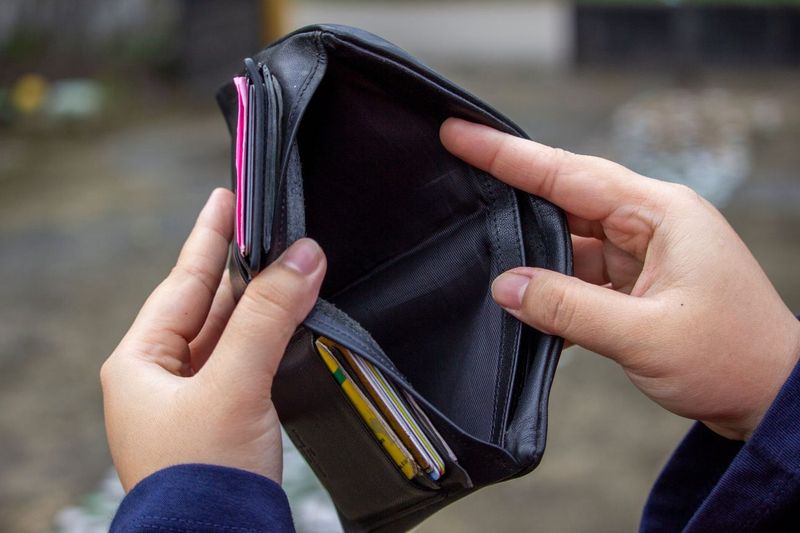
The email came in the first week of January with the subject line "Important changes to your account." I've worked in medical billing long enough to know that nothing good ever follows those words. Starting in February, my checking account at the big bank I'd used since high school would charge $12 a month unless I kept a much higher minimum daily balance than I usually do.
$12 a month is $144 a year. That's a winter car kit plus a tank of gas plus a little left over, paid to a bank for the privilege of holding my paycheck for a few days. I decided to leave before the first fee hit.
Why a credit union
I didn't pick a credit union for any big philosophical reason. I picked it because three people I trust use one, including my dad, and because the one I chose has a branch in Skokie about five minutes from my office. I like being able to walk in and talk to a person when something goes sideways, which, in my experience, it eventually does.
A credit union is a member-owned financial cooperative. For a normal checking account it works the same way a bank does: debit card, direct deposit, bill pay, an app. Deposits at federally insured credit unions are covered by the NCUA up to $250,000 per member, per ownership category, the same limit the FDIC uses for banks. I checked that before I opened anything.
The checking account I opened has no monthly fee and no minimum balance. Membership required a $5 deposit into a basic savings share, which stays in there forever as my "I belong here" money. Opening the account didn't involve a hard credit check. My score was 741 that week and 741 after.
What the switch took
Opening the account took about twenty minutes at the branch on a Saturday morning. Moving everything else took two weeks, mostly because I refused to close the old account until I was sure nothing was still pointed at it. Here's my list from the club sheet:
- My paycheck: updated in the payroll portal at work. One full pay cycle came to the old account while the change processed, which is normal.
- My student loan autopay: switched in my servicer's account settings.
- My oldest credit card's autopay, the one that pays off its single subscription each month.
- Automatic transfers to my parents: $300 for rent, $35 for my phone line, $95 to my dad for my share of the car insurance.
- The link to my online high-yield savings, so my emergency fund transfers keep running.
- My new move fund transfer, which started this month at $900.
I set up autopay on everything back in November, which made this both easier and scarier. Easier because I had a full list of what pulls from where. Scarier because if I missed one, it would fail quietly.
The one I almost forgot
My taxes. I'm filing my 2025 return in a couple of weeks, and I pulled up last year's return to get organized. The direct deposit details for my refund were saved from last year, pointing at the old checking account.
If I'd clicked through and closed the old account first, my refund would have gone to a closed account. It usually gets sent back and reissued as a paper check eventually, but "eventually" can mean weeks. I updated the routing and account number in my notes immediately and put a sticky note on the inside of my planner. I plan to send whatever refund I get straight to my student loans, so I want it fast.
I left about $50 in the old account for two full weeks after everything moved and watched for anything that tried to pull from it. Nothing did. Then I transferred the last of it out and closed the account by phone. The person on the line asked if there was anything they could do to keep me. I said they could have not added the fee. She laughed and agreed that was fair.
I also downloaded a year of statements before closing, because I'll need them for my taxes and because, for a billing person, saving records is a reflex.
The credit union's checking account came with a feature I didn't go looking for: you can open more than one checking account under the same membership and name them. I'm thinking about using that later this year. When I move out of my parents' house later this year, a separate account just for rent and fixed bills might make it a lot harder to accidentally spend the rent on takeout. I've done that before, in Rogers Park, and I'd rather not repeat the experience.
My dad asked how the switch went. I said it took two weeks and one sticky note. He said that's about how long his took in 2009, minus the sticky note, plus a fax machine.